
By Stephane PoulinAugust 28, 20265 min read
Post-Summer Gutter Check: What Heat, Hail, and Wind Leave Behind
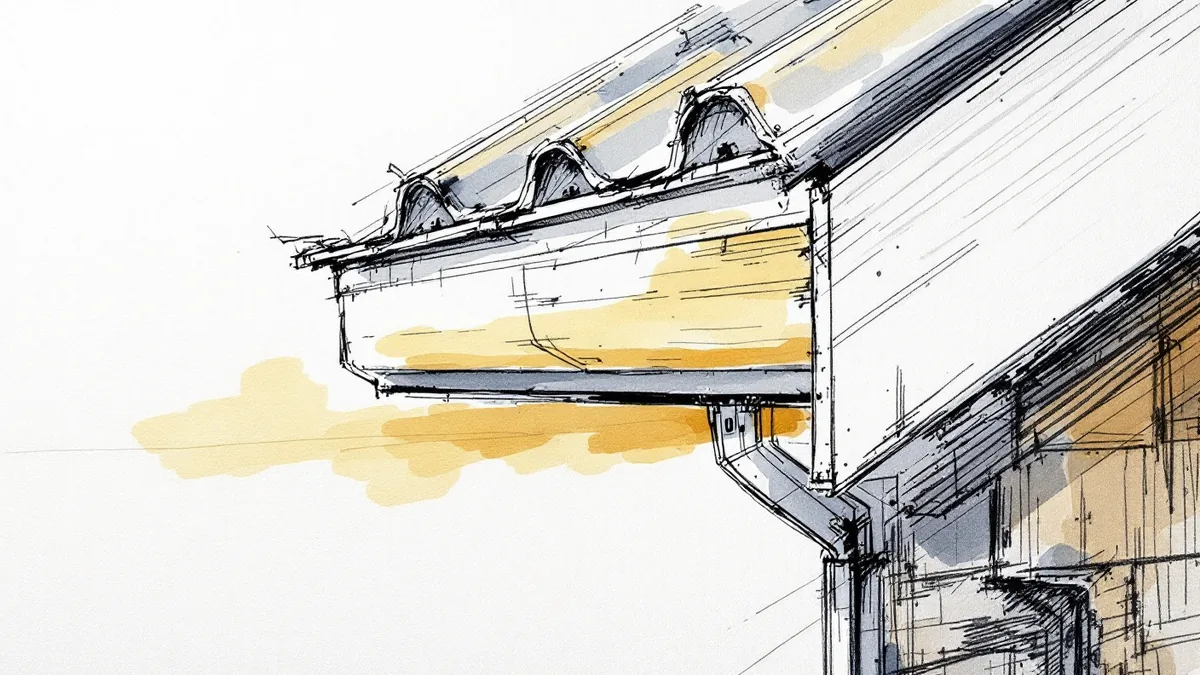
Summer is the easy season for gutters in northern BC. There is no ice, no meltwater backing up under shingles, and no snow load pulling hangers out of the fascia. That is exactly why most homeowners stop looking at them in May and do not look again until the leaves start dropping. By then, a summer's worth of damage has had four months to get worse.
A dry Peace Region summer does its own kind of damage — slower than winter, and much easier to miss.
Why Late Summer Is the Right Time to Look
Checking your gutters at the end of August or in early September gives you something October does not: time. If you find a failed seam or a sagging run now, there is still a comfortable window to get it repaired before freeze-up, and you are not competing with every other homeowner in Dawson Creek trying to book the same two weeks in October.
There is also a practical reason. Sealant and fasteners are far easier to work with in 15°C weather than in 2°C weather. Repairs done in early fall simply last longer than the same repairs rushed in November.
Failed Sealant at Seams and End Caps
This is the most common thing we find after a hot summer. Gutters expand in the heat and contract when they cool, and a long run can move several millimetres between a July afternoon and a July night. Repeat that cycle for three months and the sealant at end caps, inside corners, and downspout outlets starts to give up.
The tell is a dark stain or a streak of dirt running down the fascia directly below a joint. That stain is dried mineral residue from water that has been escaping all summer. Look for it on the ground too — a narrow strip of eroded soil or splashed dirt on the siding under one specific spot, rather than along the whole run.
Hail Damage and Granule Build-Up
The Peace Region gets hail, and gutters take it worse than roofs do because the metal is thinner and unsupported. Hail dents rarely cause an immediate leak, but a dented channel holds shallow water that does not drain, and standing water is what freezes and splits seams in December.
While you are up there, look at how much shingle grit has collected in the bottom of the channel. Heat accelerates granule loss, and a heavy layer of grit after a hot summer is worth noting — not because it hurts the gutter, but because it tells you something about how much life is left in the roof above it.
Wind: Loose Hangers and Displaced Extensions
Summer thunderstorms in the Peace bring hard, short gusts. Those gusts work on gutters differently than steady winter weight does: they flex the run repeatedly rather than loading it. Spike-and-ferrule fasteners on older homes loosen quickly under that kind of movement.
Grab the front edge of the gutter and give it a gentle pull. If it moves more than a few millimetres away from the fascia, the fastener behind it has lost its grip. Also check that downspout extensions are still pointed where you left them in spring — they get kicked, mowed around, and blown out of position all summer, and an extension dumping water at the foundation is worse than no extension at all.
Nests and Blockages You Only Get in Summer
Downspouts make excellent nesting sites. Wasps in particular like the sheltered top section of a downspout elbow, and birds will build in an open outlet. Neither will clear out on its own, and a nest packed into an elbow is a solid plug that you will not discover until the first heavy October rain overflows the gutter.
Flush each downspout with a hose before fall. If water backs up or comes out in a trickle, the blockage is in the pipe, not the channel. Deal with wasp nests carefully, and in the evening — or leave that one to us.
Dust, Smoke, and Ash from a Dry Summer
After a dry, smoky summer, gutters across the region collect a surprising amount of fine ash and road dust. On its own it is harmless. Mixed with the first fall rain, it turns into a dense sludge that sets in the bottom of the channel and holds moisture against the metal all winter. It also clogs the fine mesh on gutter guards far more effectively than leaves do.
If your summer was dusty, plan on flushing the channels rather than just scooping them.
What to Do With What You Find
Most of what a post-summer check turns up is small: a length of sealant, two or three replacement hangers, one downspout cleared. Handled in September, that is an hour of work. Left until the ground freezes, the same list becomes a spring repair after water has been getting behind the fascia for five months.
We inspect gutters across Dawson Creek, Fort St. John, Pouce Coupe, and Chetwynd, and we will tell you honestly whether what we find needs work now or can wait. If you have not looked at your gutters since spring, this is the month to book it.